The sun stands still. In the Northern Hemisphere, we are moving through the longest night of the solar year - the solstice, which literally means ‘the sun stands still’. Stillness is a rare delicacy these days, and this invitation is one to be savoured intentionally.
Being in relationship with the wider seasonal cycles means being invited to participate in them - to adapt our sense of speed, which can sometimes feel like a synthetic pulse of constant acceleration, to a relational rhythm, a beat of belonging. When the sun pauses, it is an opportunity for us to mirror her, to stop, reflect, look back at what was and simultaneously be with the seeds that want to be planted in the darkness. You don’t plant a seed in winter expecting it to sprout tomorrow. You place it in the dark so it can dream, rest, and gather potential energy until the light returns. This is a period of incubation, a womb-like space where life originates and where it also dies. The poetics of darkness.
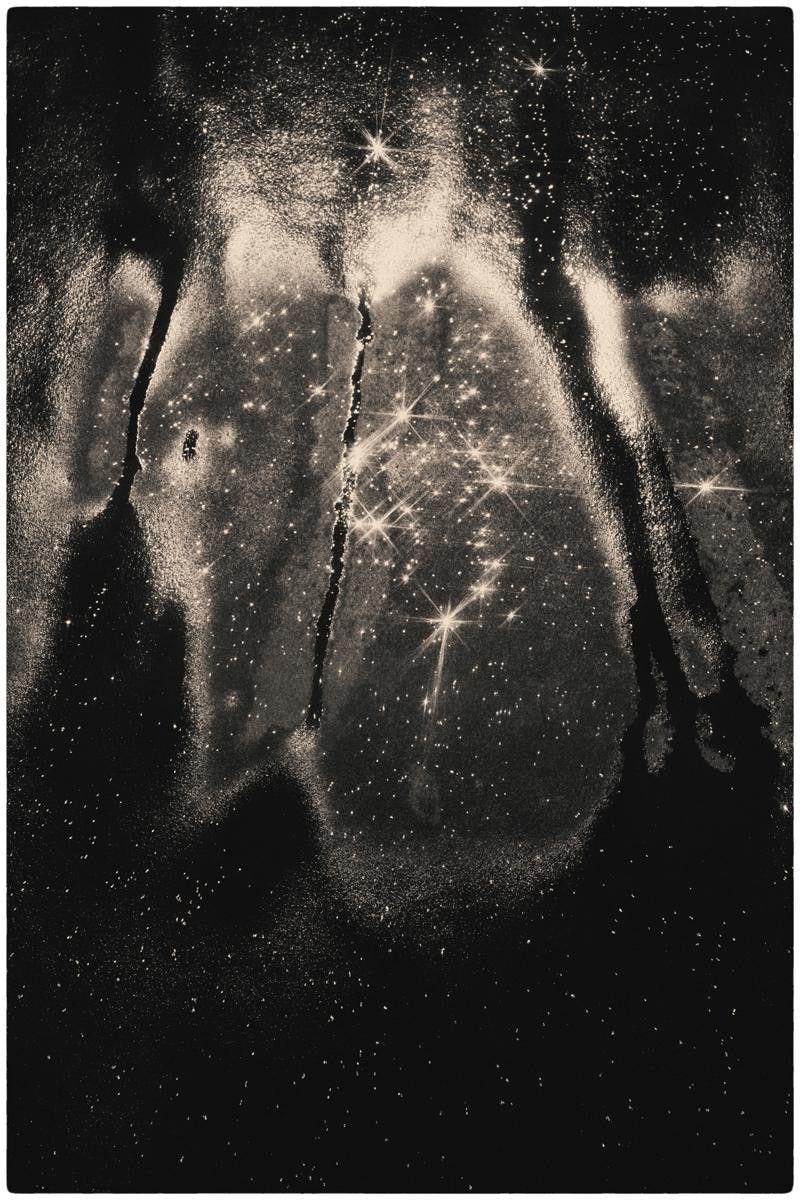
Historically, the solstice was a time of ritual and communal celebration - and for us, humans of modernity, where community and ritual are often lost practices, it can also be a moment of reclamation and remembrance.
So let’s remember. Let’s remember the beliefs that we still carry somewhere in our bones, those stories in which we had a role to play in the cosmos, the tales in which our actions could contribute to the sun’s return from darkness.
This is how ritual in many magick traditions works - through symbolic correspondence. The actions we perform through symbols in our microcosm, in our inner world, create a resonance that ripples out into the wider world. Lighting a candle becomes an act of creation - a miniature sun brought into being by our humble action. What we choose to do matters. What we enact in the microcosm mirrors itself in the macrocosm in mysterious ways beyond our limited perspective.
When we celebrate the shortest day, we are not only deepening our intimacy with the Earth and its cycles, we are also reweaving ourselves into a long lineage of others who have been in awe and deep relationship with the cosmos for millennia. It’s a communion with our roots, with the fact that we are a collection of stories past and present.
Let’s share some stories, have a taste of some traditions that have traveled across generations. I love the sensuality of the Persian celebration of Yalda, where poetry and pomegranate seeds are used to stay awake all night, a gathering of tales told with family and friends. And I also enjoy the transgressive qualities of Saturnalia, the Roman midwinter festival honouring Saturn, where roles were reversed, social hierarchies loosened. The custom of exchanging small gifts is in fact what helped seed some of our Christmas gift-giving traditions.
And in the Alpine region, from where I am birthing these words, there is the tradition of Rauhnächte, a liminal time for protective rituals, dream incubation and the making of wishes for the year to come. During these twelve nights, it is said that the veil between worlds is thin and that visions tend to carry a special potency.
These solstitial traditions are ancient, pre-Christian ways of honouring the turning of light and dark, carried across many centuries, in some cases over two thousand years. Sometimes ritual and cultural memory survive millennia, carried in stories, songs, small acts of remembrance.
Honoring rituals across traditions and time is not necessarily about replicating them. They are keepers of wisdom, pointers toward beauty. They hold an invitation to consider what it would look like for us to use this time to pause, to connect to darkness, to deepen our relationship with the Earth in ways that feel authentic, relevant, meaningful to us.
We live into the stories we tell.
May ours be beautiful. May they nourish the soil.
Laura
𒀭
What is your way of honoring solstice?
Are there any practices that have been passed down to you, that you have recovered, reimagined, remembered?
I’d love to know.
Darkness can also be a space for revelations. Revealing ourselves can sometimes be easier in the dark. Maybe that was the spontaneous spark I followed that led me to create my first ever reel, exploring the theme of the solstice. I had fun playing with this new format and being a complete amateur - and it simultaneously feels vulnerable to share something so far from polished, but perhaps that is exactly the point. So if you are curious to see my little attempt, voilà, here it is.
And if you are curious to follow my (slightly less random) experiments in writing:
*written from my favourite corner of the couch, with copious amounts of chai